There's an automated program running out of Ohio State University that searches the visible night sky every day for things that flare up or explode. Called the All-Sky Automated Survey for SuperNovae (or ASAS-SN), the most high-profile targets are new supernovae, but in amongst those headliners it has cataloged hundreds of thousands of average, garden-variety stars that have varied in brightness enough to be noticed. One of those recently caught in the act was ASASSN-24fw (here, the 24 means that it was found in 2024 and the fw is just a sequential identifier) when it almost vanished from view, and then just 8 months later suddenly brightened again as though nothing suspicious had happened.
Now, we see stars brightening and dimming all the time. Far from being unusual, variable stars are probably the norm. Even the energy output of the sun varies by about 0.1% over its 11-year solar cycle. The reasons are really pretty simple. Stars can physically grow or shrink in response to the shift in balance between gravity and pressure as a star ages. Or, something can move in front of them. Like a planet, for example.
If you can remember back to 2019, you might recall a lot of speculative media reports about the impending explosion of the star Betelgeuse. Betelgeuse is an interesting star, partly because of the name, but also because it is very large and relatively close to us and so is quite easy to spot at night. In 2019 we saw The Great Dimming of Betelgeuse (Jadlovský et al.) and we waited for it to go supernova. Luckily, people quickly realised that the dimming was probably less an indication that the star was ready to explode, and more that it had ejected a massive amount of gas that had cooled into a dust cloud and was now blocking its light. This was certainly not as attention grabbing, but we do still expect Betelegeuse to go supernova - maybe even sometime within the next 100,000 years.
Go back just a few years more, and the talk was all about Tabby's star - and not only due to its nickname, the WTF star (an acronym for Where's the Flux - obviously). Tabby's star began dimming erratically in 2015, and on that occasion, astronomers got creative and hypothesised that a Dyson swarm was blocking the light from the star (Wright et al.). It took a good few years before we had enough data to realise it was probably also just clouds of space dust. Yes, that should probably have been the favoured explanation from the beginning, but it's not every day that you get to talk about Dyson swarms and Dyson spheres in serious scientific papers.
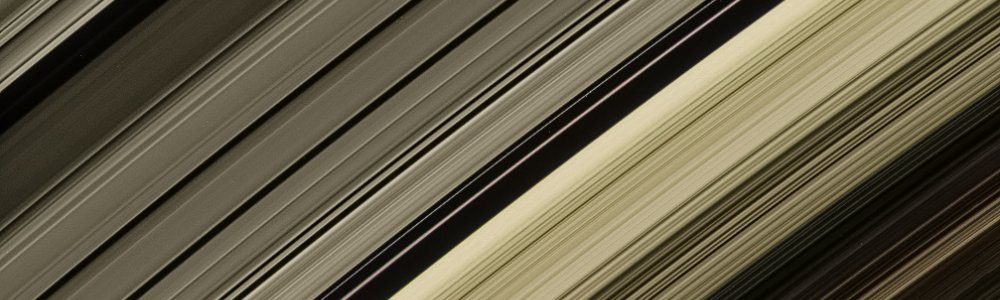
So, what about ASASSN-24fw and its recent dimming? Well, nobody has jumped to the alien megastructure blocking our view explanation - yet. When astronomers looked further into their data, they realised that ASASSN-24fw had undergone the same dimming about 44 years previous, in 1982. And, 44 years before that, in 1937. The current theory is that there is a brown dwarf, a star that never quite got big enough to light up, that is orbiting a very long way from the main star and blocking our view every 44 years. But it would take more than just an oversized planet (or undersized star, depending if you are glass half-full or half-empty) to block so much light. It would need to have its own ring system, and I mean an enormous ring system, much, much bigger than Saturn's. In fact, it would need to stretch about as far from the planet as Mercury is from the Sun. Maybe then it could, in theory, cast a shadow over ASASSN-24fw that could, in theory, have caused the significant dips in brightness that we've observed.
Even still, a puzzle remains. How would such a massive ring system have survived long enough that we are able to observe it now? Our studies of planetary rings have led us to the understanding that they are relatively fragile and short lived. Gravity and solar winds tend to disperse them over time. It's possible though, at least in theory, that the brown dwarf's ring system could have been replenished in the last 100-million years or so if some smaller, unsuspecting moon had gotten too close (past the brown dwarf's Roche limit) and been shredded by its gravity. Well, actually it would have taken a lot of unsuspecting moons to keep those rings restocked with debris. In theory anyway.
Sure, this is all possible subject to all the unlikely, but theoretically possible, stuff, but it's still a lot more plausible than Dyson spheres. Thankfully, in another 44 years from now, we'll get another opportunity to take a look at a dimming ASASSN-24fw. Maybe by then our telescopes will be powerful enough that we can see the culprit firsthand. Just don't expect it to be a construction crew.